Young Students Receive the Sacred Thread at a Community Upanayan Ceremony

Prayagraj, July 7 Upanayan (Yajnopavit) ceremony
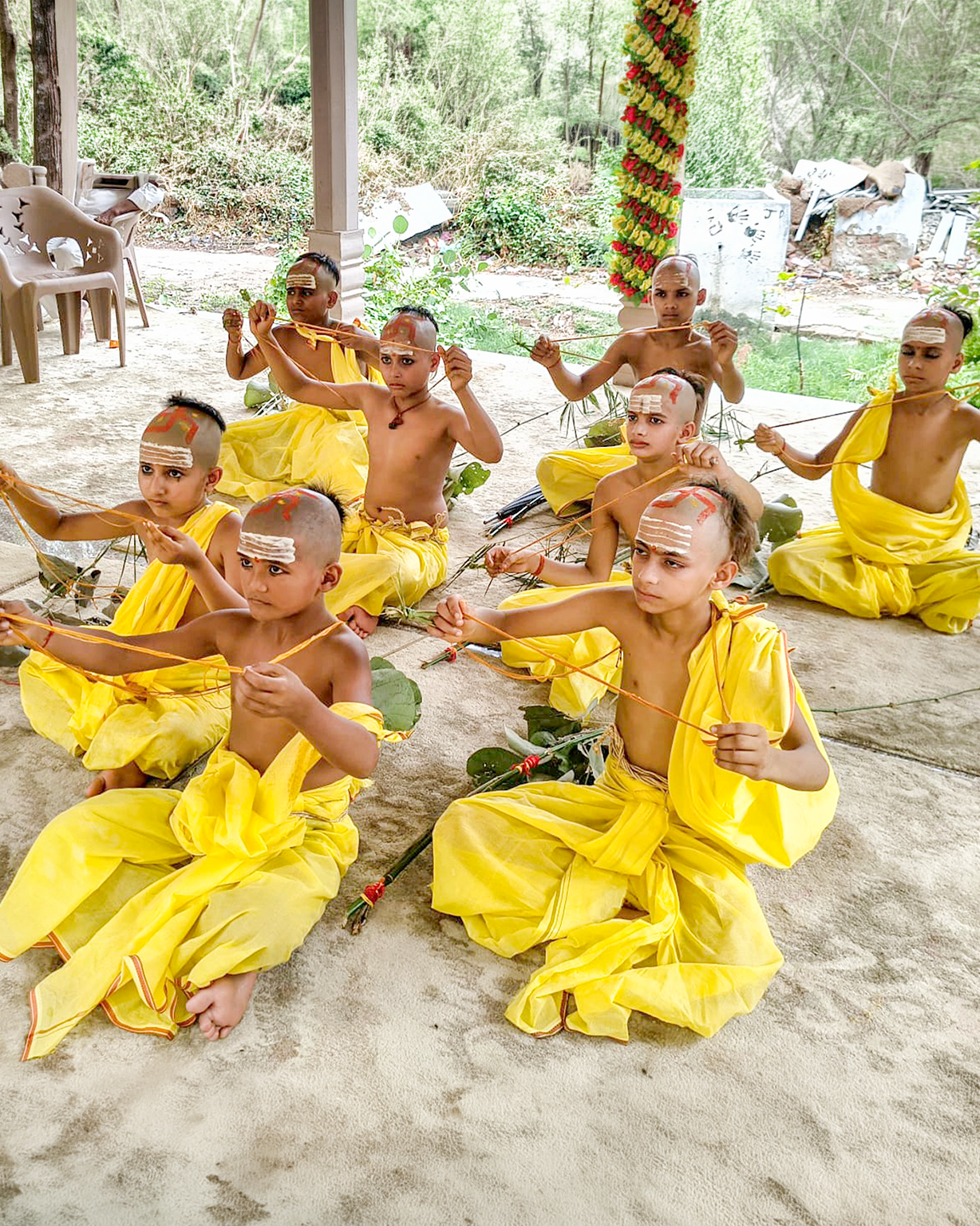
A community Upanayan (Yajnopavit) ceremony was held at Shri Swami Narottamanand Giri Veda Vidyalaya, located in the Parmanand Ashram campus, Jhunsi, before the newly admitted students began their Vedic studies. The ceremony was conducted under the guidance of the school's Principal, Brajmohan Pandey, in the presence of parents, relatives, and learned Vedic scholars.
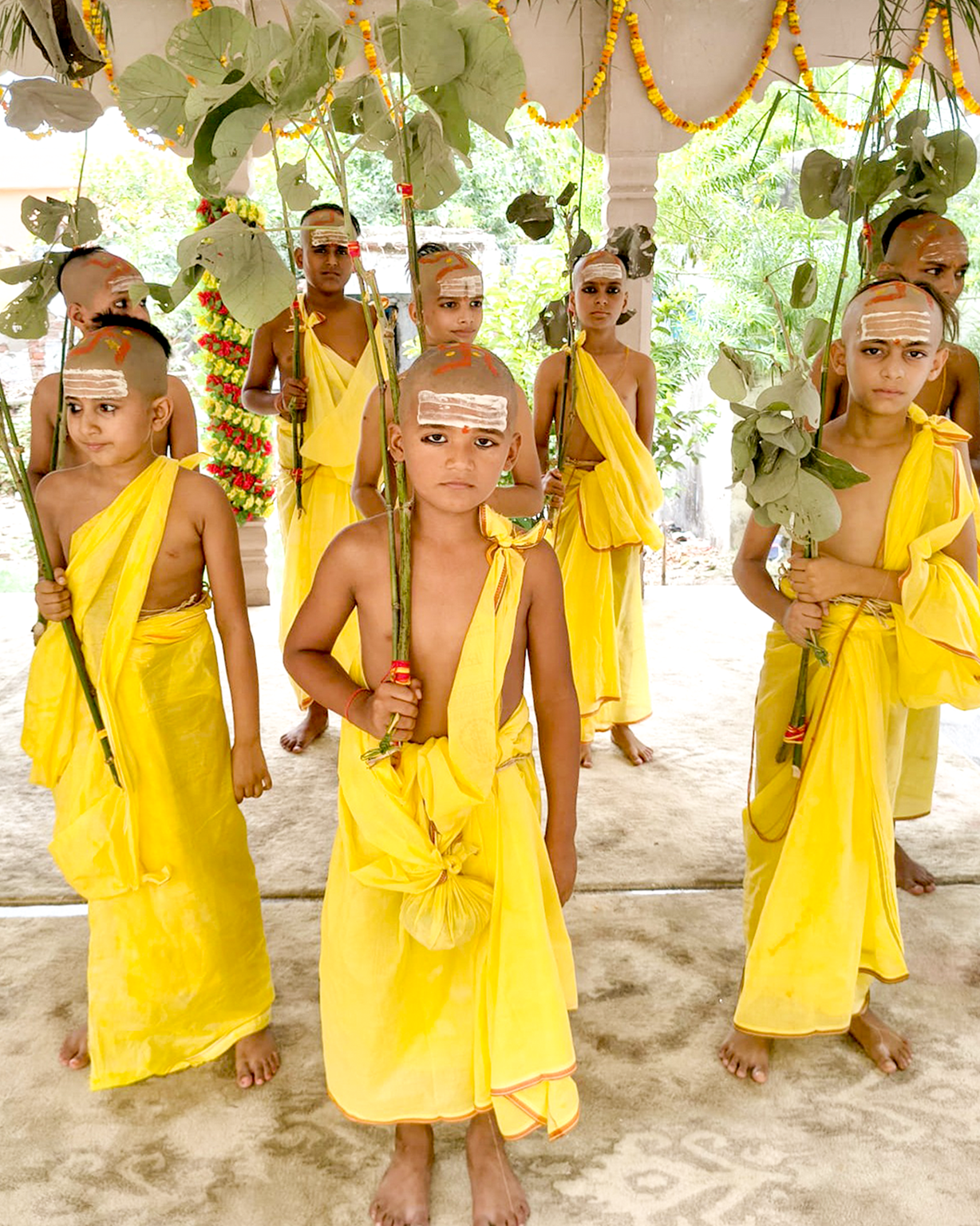
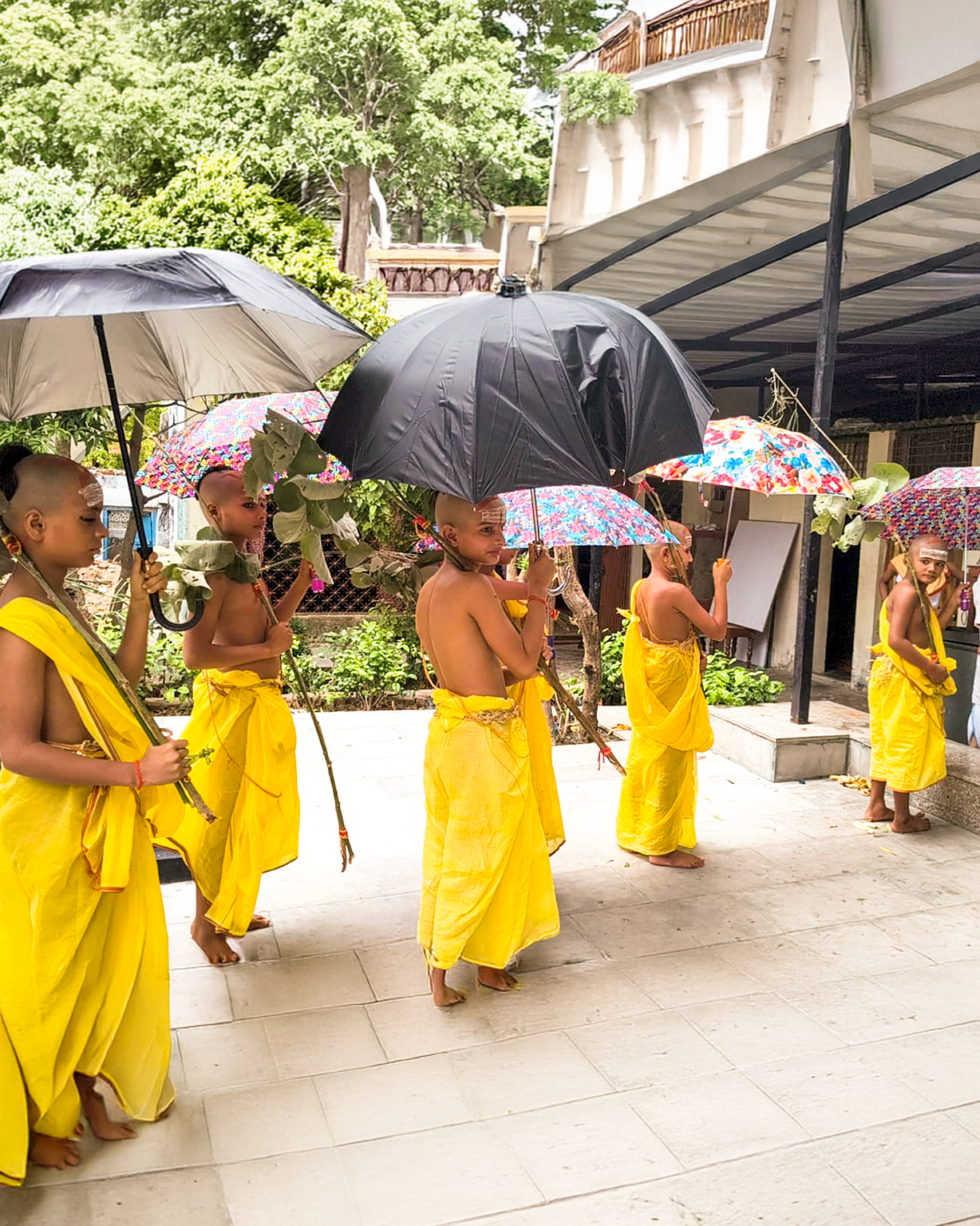
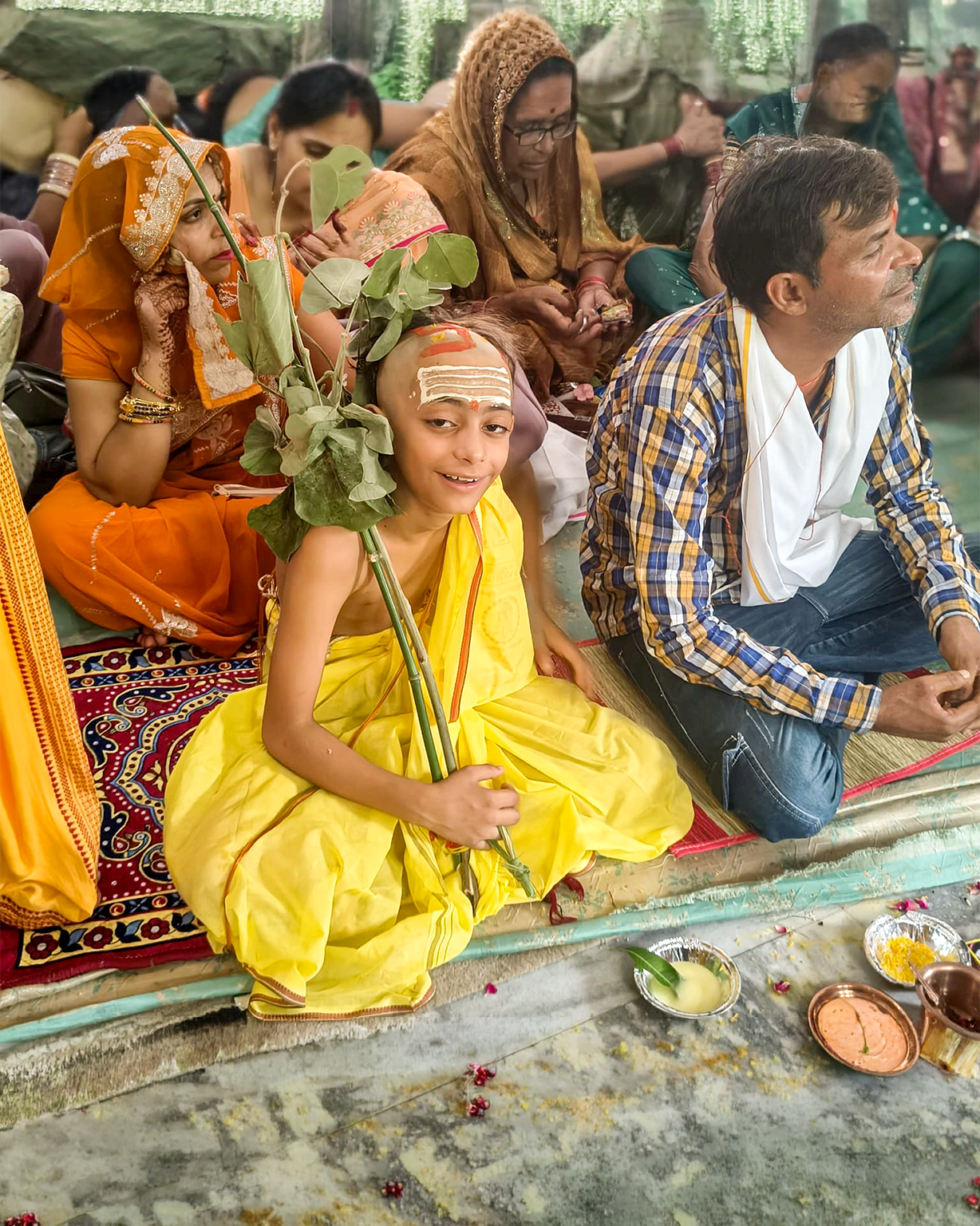
The Upanayan ceremony, also known as the Sacred Thread Ceremony, is considered one of the 16 important Hindu Sanskars (rites of passage). During the event, the young students, known as Batuks, wore the sacred thread and formally entered the path of Vedic education.
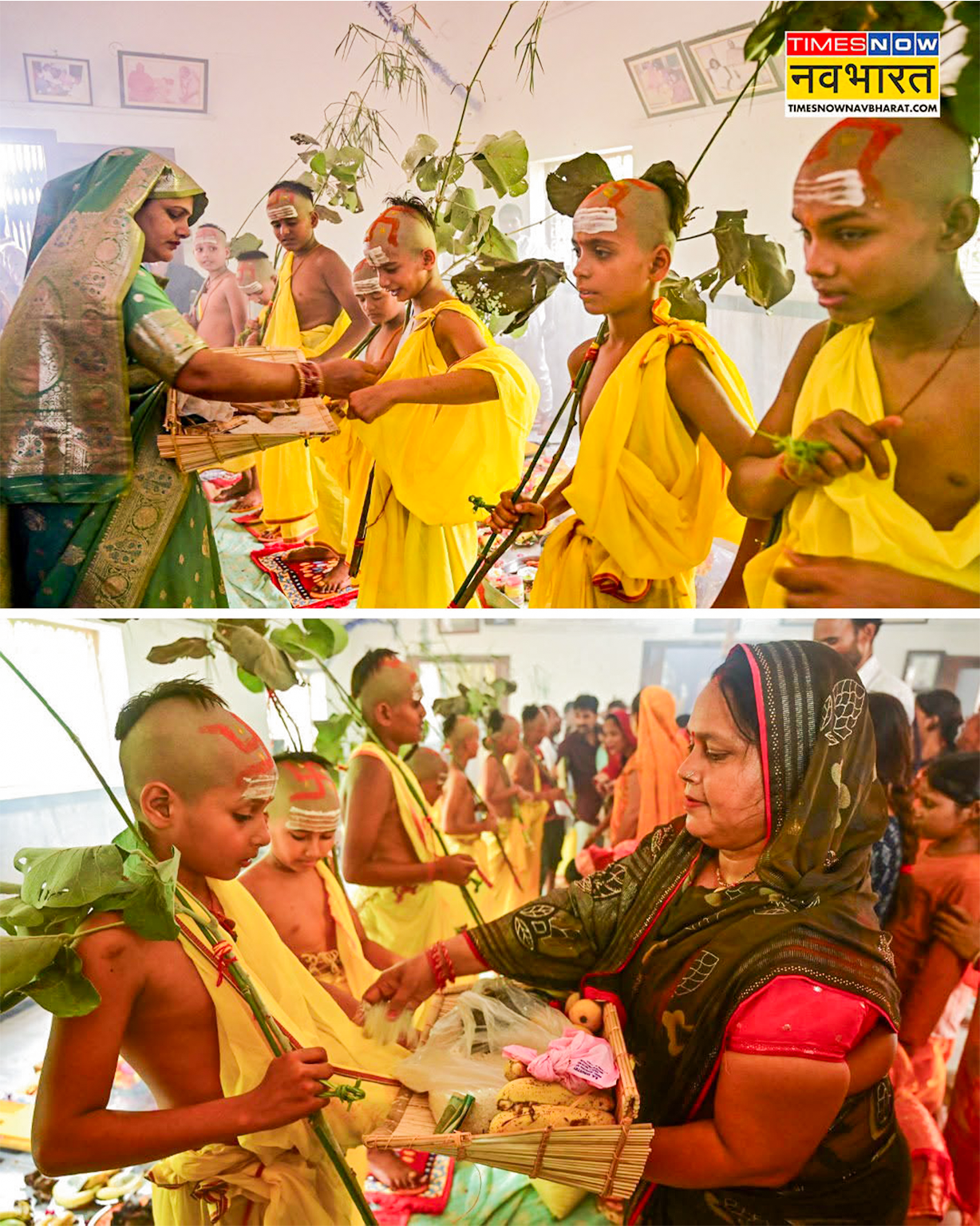
A special part of the ceremony was Bhiksha (seeking alms). The Batuks requested alms from their parents as a symbol of giving up pride, learning humility, and understanding the importance of receiving knowledge with the support of society. According to tradition, this practice teaches children to become humble, respectful, and grateful. When a child asks for alms from the mother, it also represents love, care, and the beginning of a life guided by knowledge and a guru rather than material dependence.
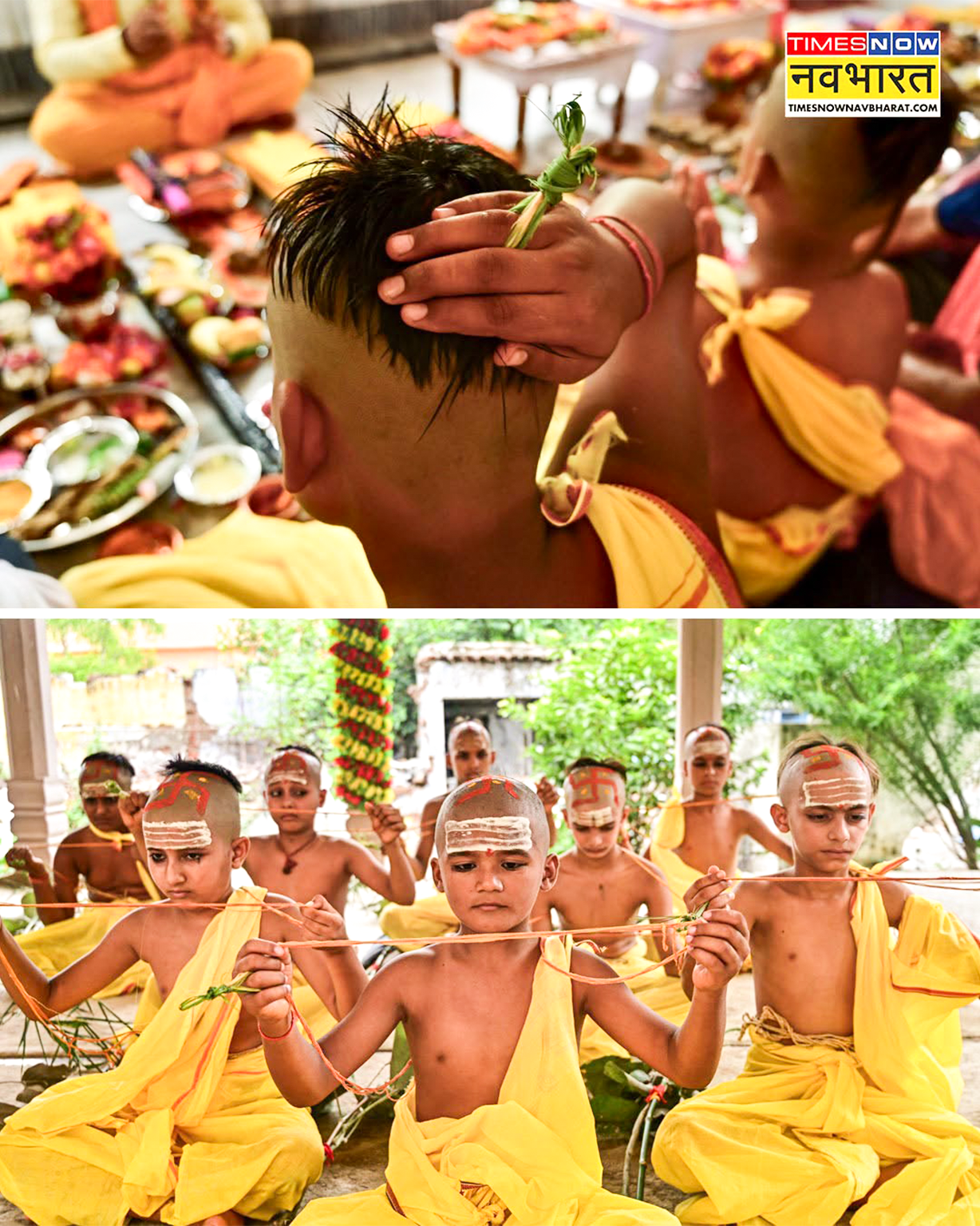
Principal Brajmohan Pandey explained that although Hindu scriptures mention many Sanskars, 16 are regarded as the most significant, and Upanayan is one of them. He said that after receiving the Guru Mantra, the student wears the sacred thread, which consists of three strands tied together by a knot called the Brahma Granthi. The knot symbolizes Lord Brahma, while the three strands represent Lord Brahma, Lord Vishnu, and Lord Shiva. The ceremony also teaches students the values of discipline, self-control, and the principles of Brahmacharya.
The newly initiated Batuks received the blessings of Mahant Swami Vidyadhishanand Giri Ji Maharaj of Parmanand Ashram. The complete Upanayan rituals lasted for nearly five hours, followed by the distribution of Bhandara Prasad.
The students who received the sacred thread included Avi Mishra, Shivansh Tiwari, Samast Pandey, Gaurav Tiwari, Lakshya Shukla, Shivansh Dubey, Aryan Pandey, and Ansh Shukla..
Speaking about the significance of the ceremony, Principal Brajmohan Pandey said that Upanayan is the first major Sanskar for the three traditional varnas, and only after this ceremony is a child considered a Dvija (twice-born). According to the scriptures, this marks the beginning of a child's spiritual and knowledge-based life, with the Acharya (teacher) regarded as the father of this new birth and Goddess Gayatri as the mother.
Before the Upanayan ceremony, the Batuks underwent the traditional head-shaving (Mundan) ritual. This was followed by the worship of Lord Ganesha and other deities, Vedic rituals, and prayers. The students were seated with ceremonial garments and garlands while Vedic mantras were chanted. After receiving the Gayatri Mantra, the Batuks offered the collected Bhiksha to their Guru, who then whispered the Guru Mantra into their ears, formally initiating them into Vedic learning.
The programme was coordinated by Acharya Shivanand Dwivedi. Senior Vedic scholars, including Khimlal Nyopane (Atharvaveda), Jeevan Upadhyay (Yajurveda), Gaurav Chandra Joshi (Yajurveda), Brajmohan Pandey (Samaveda), Krishnakumar Mishra, Avani Kumar Singh, Anjani Kumar Singh, and Ajay Mishra, along with parents, ashram residents, and many local dignitaries, were present at the event.